From Copilot to Autopilot
A Morning Commute That Ships Software
Not long ago, building software required a team, a backlog, sprint planning, and weeks of iteration before something tangible appeared. Last Friday, I started building a new feature while walking to work.
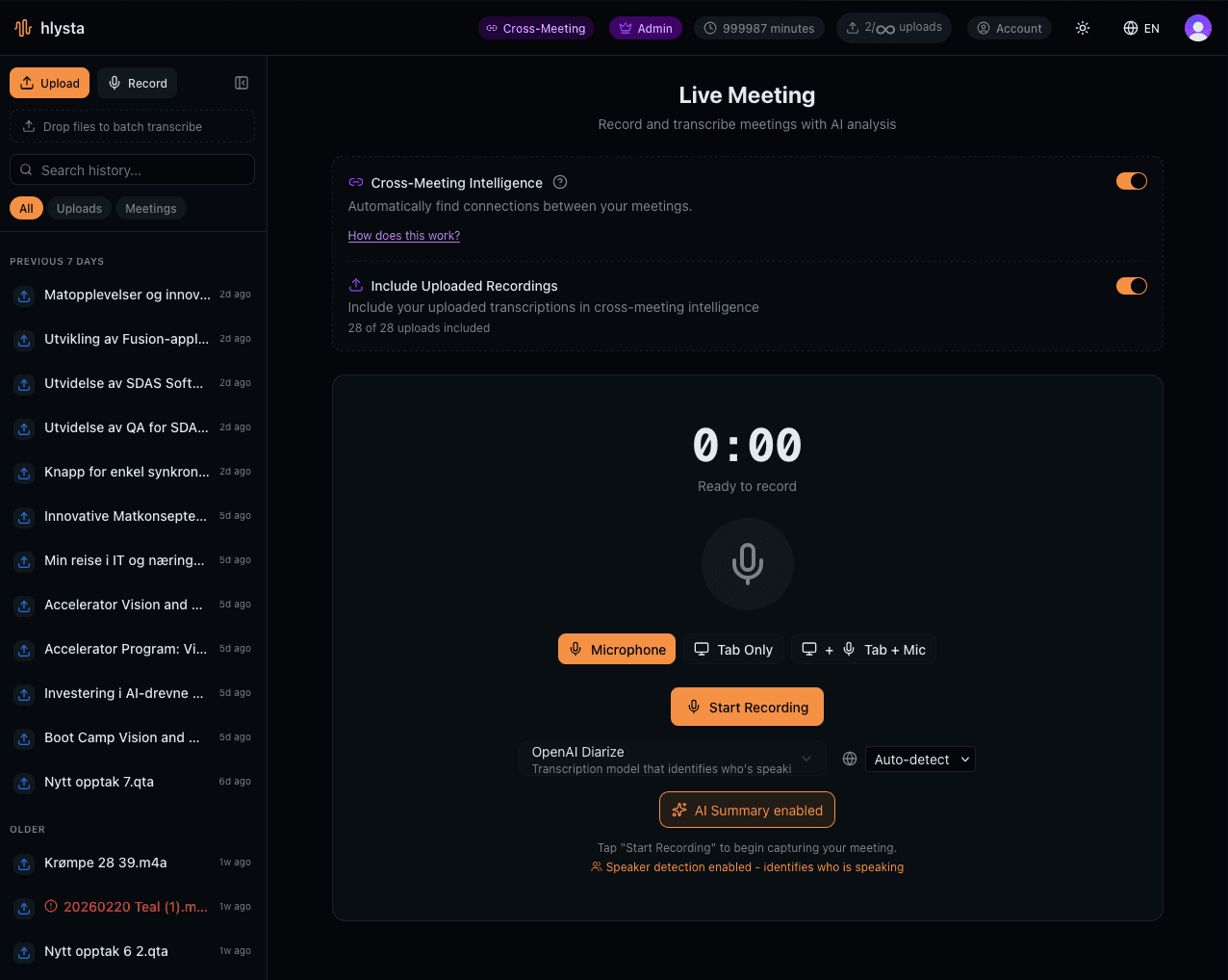
I pulled out my phone and recorded a short voice note describing what I wanted: an extension to our platform that would allow users to provision an OpenClaw instance directly from inside their back office system. The idea was simple — the user enters credentials for an external service, and the system spins up a working OpenClaw environment that can communicate with the rest of the application.
I hit stop on the recording and put the phone back in my pocket.
That was the start.
Voice capture
A short recording. That's where it starts.
Software Development, Running on Autopilot
At Day of Week we've been building something we call Software Development as a Service.
The idea is simple: development shouldn't always start with code. It should start with intent.
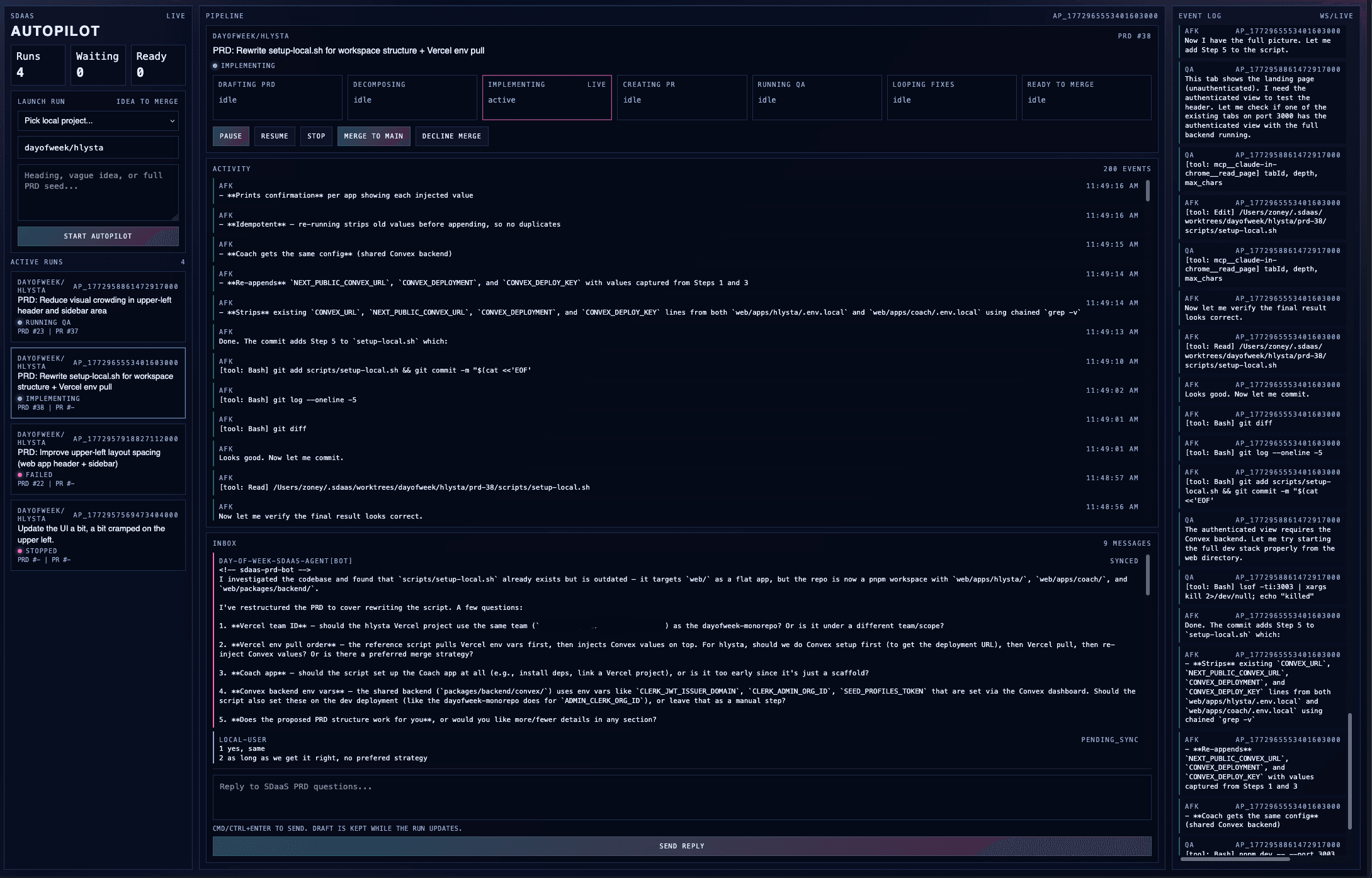
When that voice recording was uploaded, our system transcribed it and sent the transcript into our development autopilot. From there, a chain of events kicked off automatically:
01
Draft PRD
The system drafted a Product Requirement Document based on the transcript.
02
Break down & implement
It broke the idea into smaller engineering tasks and started implementing directly in the codebase.
03
Test & deliver
It generated a pull request, ran a full QA cycle, and looped back to fix any issues.
The autopilot runs a full QA cycle. It analyzes the code for issues, checks for potential security concerns, and spins up the user interface to interact with the implementation just like a user would. It clicks around the interface, runs tests, and identifies anything that behaves unexpectedly.
If it finds bugs, it loops back, fixes them, and tests again.
Once it is satisfied, the system asks a developer to review and approve the merge into the main branch.
Not fully hands-off. But very close.
Coffee First. Software Second.
By the time I arrived at the office, the system was already running.
I sat down with a cup of coffee and chatted with colleagues about the weekend. A few minutes later, I got a ping.
The feature I started during my commute was ready to test.
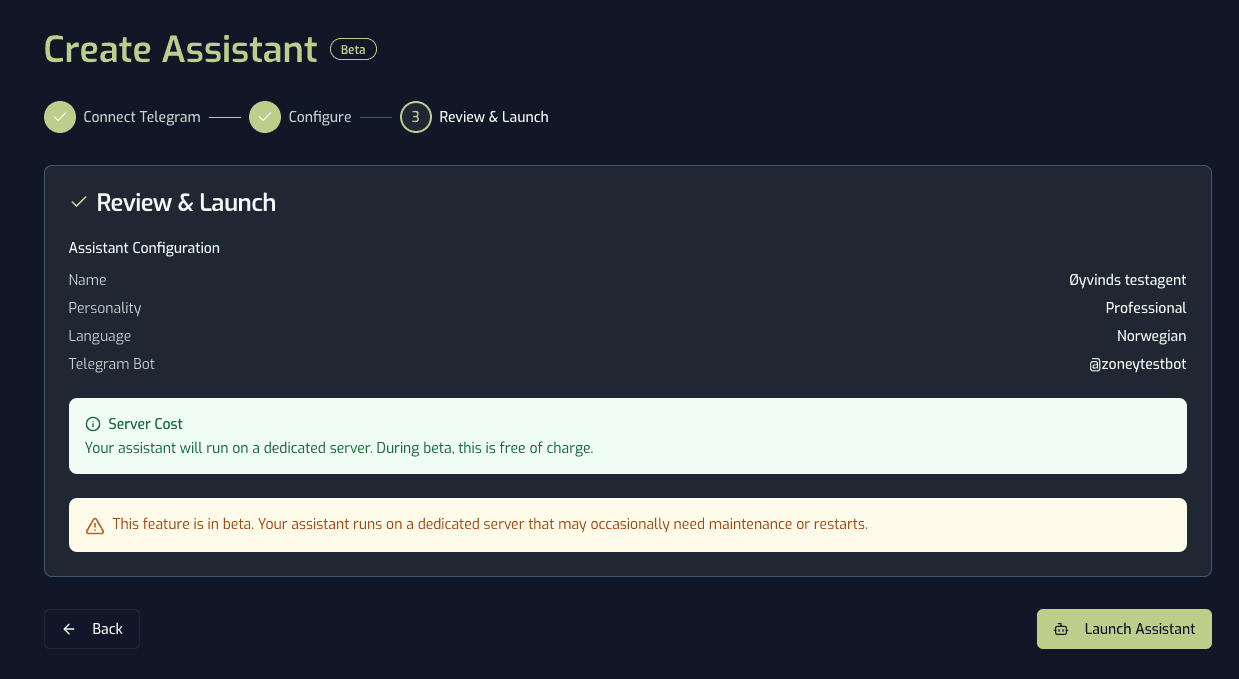
That same day we launched the ability to spin up OpenClaw instances directly inside the Day of Week ecosystem.
The entire process — from voice idea to working implementation — happened largely on autopilot.
The result
Voice note to working feature
- Voice recording during morning commute
- System transcribes and drafts PRD
- Tasks broken down and implemented
- QA cycle runs automatically
- Feature ready to test over coffee

Coding is becoming solved infrastructure. But developers are still essential.
Someone needs to guide the system, define the problems, evaluate the results, and decide what should actually be built.
We Are Entering the Investigation Phase
A lot of people are trying to predict what this means for software development.
Some say coding is dead. Others say developers will become irrelevant. Both are wrong.
What we're seeing is a shift from Copilot to Autopilot. Developers move from typing every line of code to directing systems that produce working software.
But this shift won't happen overnight. We are entering what I call an investigation phase — a period where companies need to experiment, test boundaries, and learn how these systems behave in real production environments.
Developers move from typing every line of code to directing systems that produce working software. The shift from Copilot to Autopilot is not about replacing people — it's about multiplying what they can do.
The Technology Is No Longer Locked Inside Big Tech
One of the most important aspects of this moment is that the technology is not centralized. Many of the models powering these workflows are open source. The tools required to build autonomous development pipelines are accessible to anyone.
Yes, some large labs still lead in raw capability. But the infrastructure required to build powerful systems is now available to startups, independent developers, and small teams.
This means the playing field is changing. And fast.
What's changed
Open and accessible
- Open-source models powering production workflows
- Autonomous pipelines anyone can build
- Startups competing with enterprise tooling
- Small teams shipping at big-team velocity
What it means
For hotels, restaurants, and farmers
- Custom software no longer requires a tech team
- Ideas can become working tools in hours
- Innovation happens at the speed of intent
- The gap between big tech and everyone else is closing
2026 Will Be Wild
At Day of Week we are already producing features at a pace that would have been hard to imagine just a year ago. The systems we are building are not replacing developers — they are multiplying what developers can do.
If the current trajectory continues, 2026 is going to be mind-blowing.
But the most important thing companies can do right now is not wait.
Start testing
Run experiments with autonomous workflows in your own environment. See what works.
Start experimenting
Pick a real problem. Let the system attempt a solution. Evaluate the output.
Start learning
One step at a time, while staying in control. Don't wait for big tech to define the rules.

“Don't sit on the sidelines until big tech defines the rules. Start investigating what's possible.”
Øyvind Brekkhus Sandåker — Co-Founder & CAIO, Day of Week
Let's Explore This Together
We are actively working with partners and customers who want to explore what Software Development as a Service can enable inside their organizations.
If you are curious about what autonomous development workflows could look like in your company, we would love to hear from you.
We are still early in this journey — which makes this the perfect time to start investigating what's possible.
Let's build the future together
Whether you're a hotel rethinking the guest journey, a restaurant building around local producers, or a farmer turning your story into a destination — we can help you explore what autonomous development workflows could unlock.
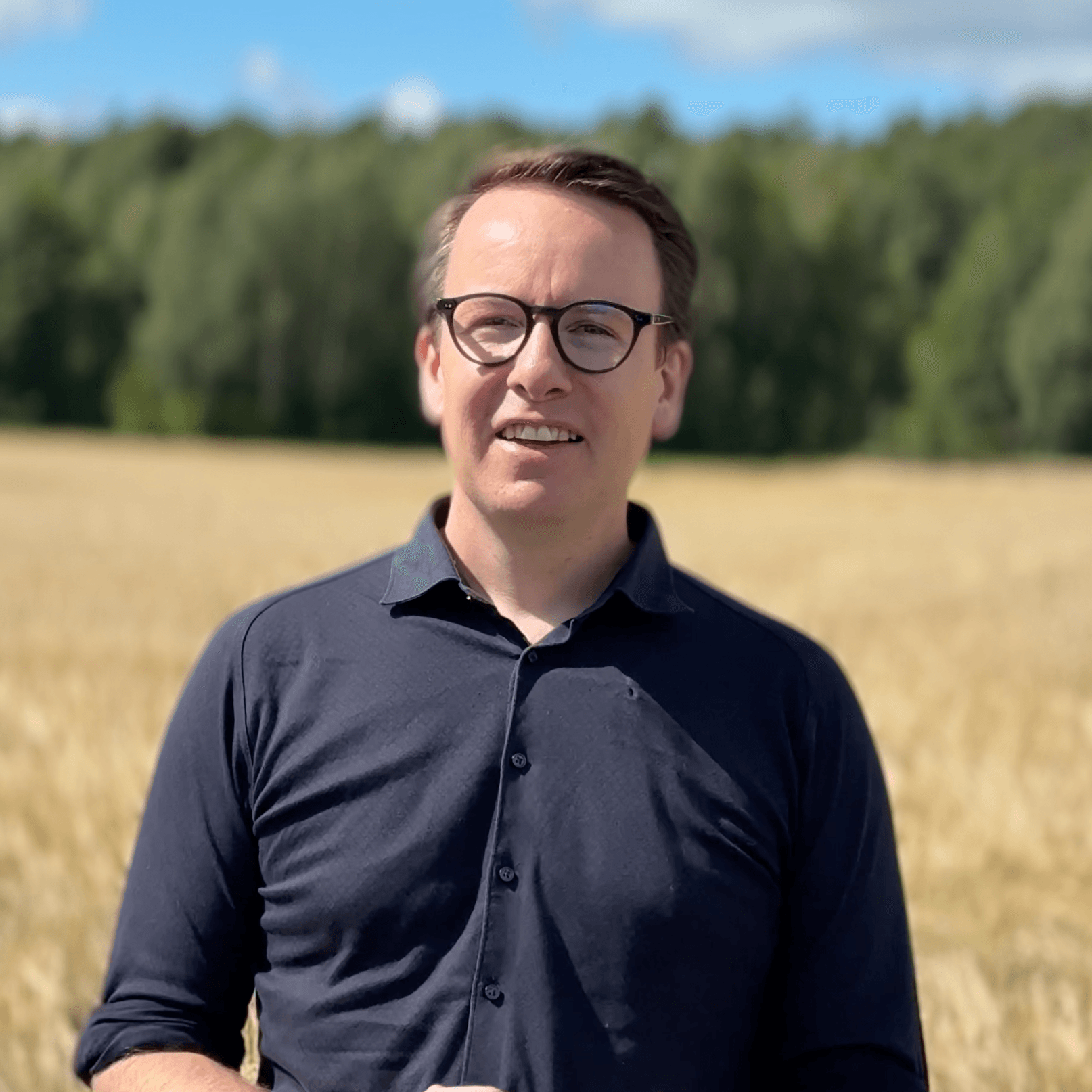
Øyvind Brekkhus Sandåker
Co-Founder & Chief AI Officer
Day of Week